.webp)
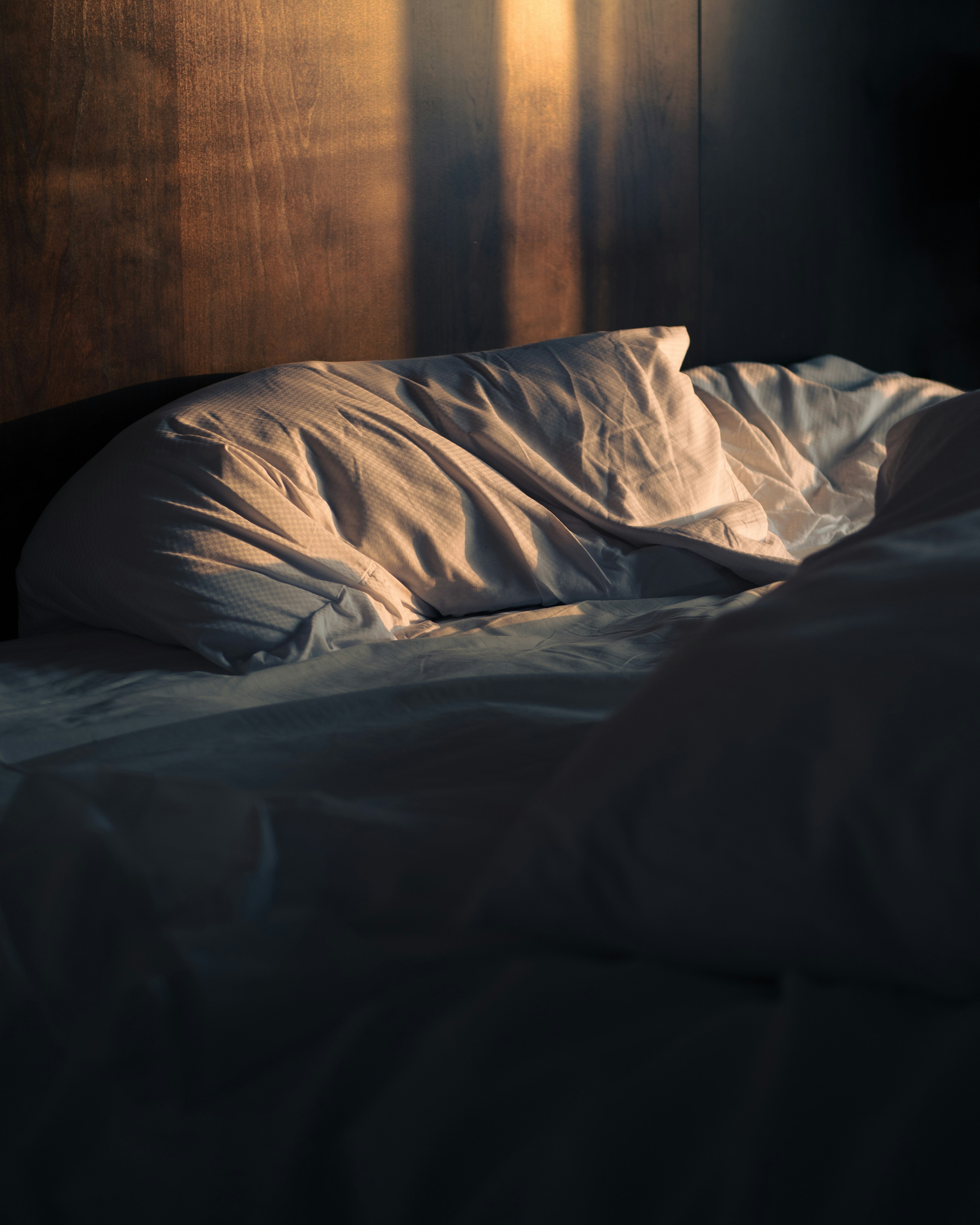
Most people treat sleep as the thing that happens after everything else.
You work hard all day. You squeeze in a workout. You handle family responsibilities. You maybe watch some TV to decompress. And then, whenever you finally wind down, you sleep. Sleep is treated as leftover time, the thing you give up when something else needs your attention.
If you're serious about fitness, this approach is costing you more than you realize.
Sleep isn't the thing that happens when you're done. Sleep is one of the most powerful performance tools available to you, and treating it as optional is one of the biggest mistakes people make in their fitness journeys.
At Longma Fitness, we work with members who train hard, eat well, and still struggle to see the results they expect. More often than not, the missing piece isn't more training or stricter nutrition. It's sleep.
Here's why sleep matters more than most people realize, and how to actually prioritize it.
What Sleep Actually Does for Fitness
Sleep isn't just rest. It's when most of the physical adaptations from your training actually happen.
When you train, you create stress and small amounts of damage in your muscles, nervous system, and connective tissue. The training itself doesn't make you stronger or fitter. It creates the stimulus for change. The actual adaptation (building muscle, improving cardiovascular capacity, strengthening tendons, consolidating motor patterns) happens during recovery, and the most important recovery happens during sleep.
During deep sleep, your body releases growth hormone, which drives muscle repair and tissue growth. Your nervous system consolidates the motor patterns you practiced during training, so movements that felt awkward yesterday feel more natural today. Your brain clears metabolic waste that accumulates during waking hours. Your immune system does its most important repair work. Your hormones reset for the day ahead.
Skip adequate sleep, and all of this gets shortchanged. You trained hard, but your body didn't get the recovery window it needed to actually convert that training into adaptation. The work you put in gets diminished because the second half of the process never fully happened.
How Sleep Deprivation Hurts Performance
The effects of inadequate sleep show up fast, and they're bigger than most people realize.
Research consistently shows that sleep-deprived athletes experience reduced strength, impaired reaction time, decreased endurance, slower recovery between sets, and higher perceived effort during training. A workout that feels manageable after seven hours of sleep can feel brutal after five hours, even though nothing else has changed.
Sleep deprivation also affects your decision-making around food. When you're sleep-deprived, your body produces more ghrelin (the hunger hormone) and less leptin (the satiety hormone). You end up hungrier, especially for sweet, calorie-dense foods, and less able to recognize when you're full. If you're trying to lose fat, inadequate sleep makes the entire process significantly harder, even if your training and nutrition look identical to someone who's sleeping well.
Then there's injury risk. Sleep-deprived athletes have higher injury rates across virtually every study that's examined the question. Reduced coordination, slower reaction time, and impaired movement quality combine to make everything you do slightly more dangerous when you're underslept.
The person who sleeps six hours a night and trains five days a week is not getting better results than the person who sleeps eight hours a night and trains four days a week. Usually, it's the opposite.
How Much Sleep You Actually Need
The research is pretty clear on this. Most adults need between seven and nine hours of sleep per night to function well and recover from training.
Some people genuinely need less. A small percentage of the population has genetic variations that allow them to function well on six hours or less. But this is rare, and most people who claim they only need five or six hours are actually just chronically sleep deprived and have adapted to feeling tired as their new baseline.
If you train seriously, your sleep needs are at the higher end of that range. The more training stress you're putting on your body, the more recovery you need, and the more recovery you need, the more sleep you need.
If you wake up without an alarm and feel rested, you're probably getting enough sleep. If you need multiple alarms, feel groggy for the first hour of your day, and rely on caffeine to function, you're probably not.
Why Most People Don't Sleep Enough
Nobody intends to sleep poorly. It happens because of accumulated small decisions that each seem reasonable in the moment.
You stay up to watch one more episode. You check your phone one last time. You answer a few more emails. You pour another drink with dinner. You push bedtime back by 20 minutes, then another 20 minutes, until you're going to bed an hour later than you intended. Then you still have to get up at the same time, so you lose an hour of sleep.
Do this a few nights per week, every week, for years, and you've been chronically sleep deprived without ever having an obvious night of staying up too late.
The other common pattern is thinking that sleep is less important than everything else competing for your time. Work, kids, chores, social obligations, hobbies, and screen time all feel more urgent than sleep. So sleep is the thing that gets sacrificed when something has to give.
How to Actually Sleep Better
Getting better sleep usually isn't about buying expensive products or following elaborate protocols. It's about addressing a few basics most people neglect.
Consistency matters more than most people realize. Going to bed and waking up at roughly the same time every day (including weekends) stabilizes your circadian rhythm and improves sleep quality. The person who sleeps from 10 PM to 6 AM every day usually sleeps better than the person who varies between 10 PM and 1 AM depending on the night.
Light exposure drives your circadian rhythm. Getting bright light in the morning, especially sunlight, helps set your internal clock for the day. Reducing bright light exposure in the evening, especially from screens, signals your body that it's time to wind down. If you're going to use screens before bed, blue light filtering helps, but reducing screen time altogether helps more.
Temperature matters. A cool bedroom (around 65-68 degrees for most people) supports deeper sleep than a warm one. Your body temperature naturally drops when you sleep, and a cool environment supports that process.
Alcohol disrupts sleep quality even when it helps you fall asleep. A couple of drinks in the evening might make you drowsy, but they reduce the amount of deep sleep and REM sleep you get. You'll sleep longer but less effectively.
Caffeine has a longer half-life than most people realize. Coffee at 2 PM can still be affecting your sleep at 10 PM, even if you don't feel wired. Many people who sleep poorly discover that cutting off caffeine by noon makes a dramatic difference.
Finally, treat sleep like you'd treat any other important appointment. If you need to be in bed by 9 PM to get adequate sleep before your 5:30 AM workout, that's a non-negotiable commitment, not something to compromise when a show gets interesting.
The Compounding Effect
Good sleep makes everything else easier.
When you sleep well, your workouts feel better, your decisions around food are easier, your stress response is more measured, and your motivation stays higher. All the other work you're doing on your fitness becomes more effective because you have the recovery capacity to actually benefit from it.
When you sleep poorly, the opposite happens. Workouts feel harder, you crave junk food, stress hits you harder, and motivation becomes a daily battle. You end up fighting against yourself in every other area of your fitness.
Fix your sleep, and everything else gets easier.
How Longma Fitness Approaches Recovery
We coach the whole picture, not just the workouts. Our members hear us talk about sleep, nutrition, and recovery just as often as we talk about training itself, because all of these pieces determine your results.
If you're training hard but not sleeping enough, we'll tell you. Not because we're trying to add complications to your life, but because we want you to actually get the results your training deserves. The person who sleeps eight hours and trains four days a week will outprogress the person who sleeps six hours and trains six days a week almost every time.
Sleep is a performance tool. Treat it like one.
🎯 Free 10-Minute Discovery Call
Ready to build a complete approach to fitness that includes training, nutrition, and recovery?
Schedule a complimentary 10-minute discovery call where we'll discuss your goals, your current habits, and how our coaching helps you address all the pieces that matter.