.webp)
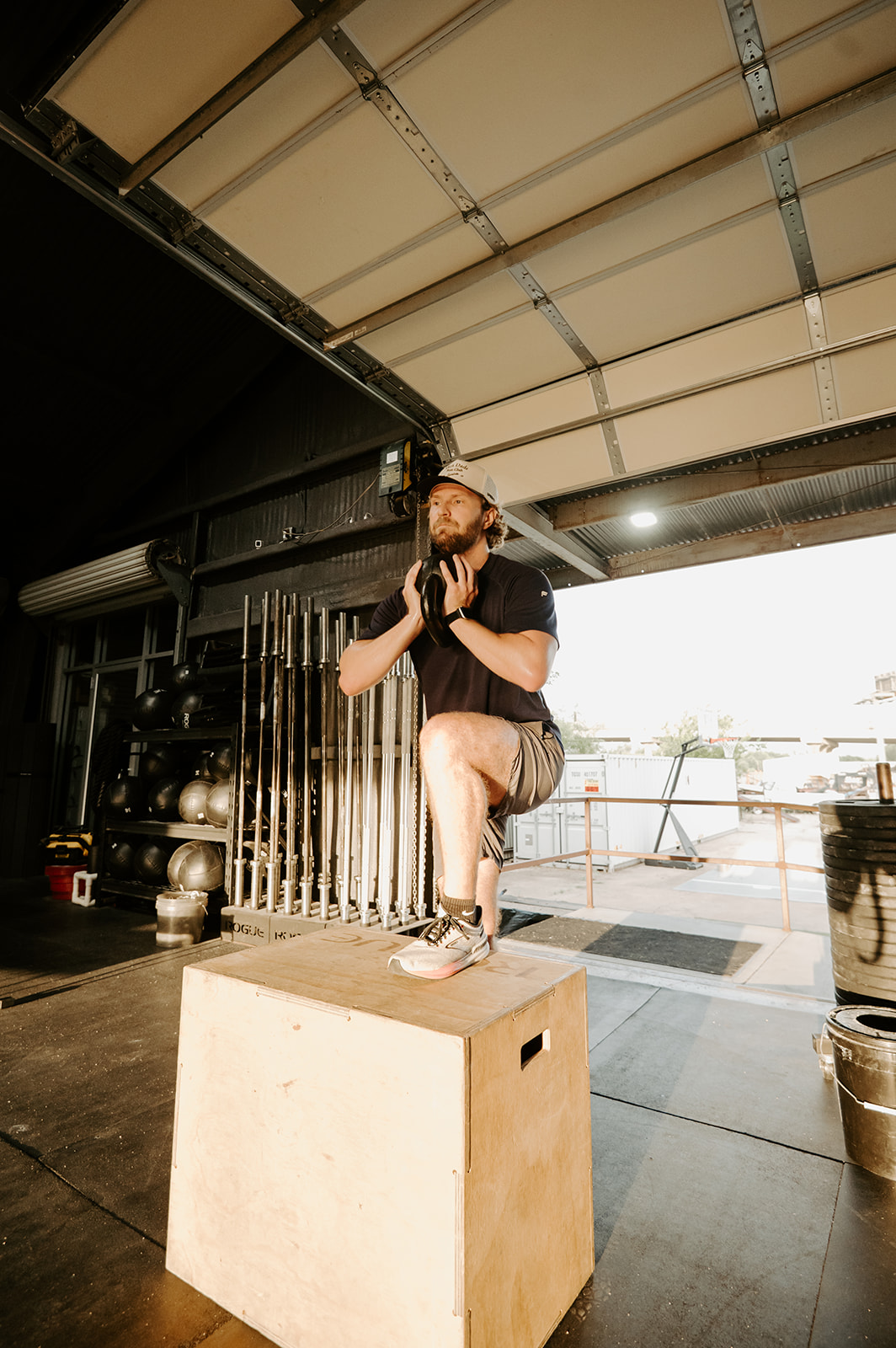
You're busy. Work is demanding. Family needs your time. Life keeps piling on responsibilities.
And somewhere on your list of things you "should" do, exercise sits there, waiting.
You want to be fit. You know it matters. But you don't have hours to spend at the gym.
Most fitness content assumes you have unlimited time. Two-hour lifting sessions. Long cardio blocks. Elaborate programs requiring 90 minutes plus travel time each way.
That's not realistic for most people.
At Longma Fitness, we've helped countless busy professionals, parents, and business owners build serious fitness in far less time than they thought possible. The secret isn't finding more time. It's using less time better.
The Problem With "More Time" Thinking
Most people wait until they have "more time" to start fitness. That time never comes.
Life doesn't get less busy. It just changes what fills the schedule. The kids grow up and new responsibilities take their place. Work slows down in one area and picks up in another. Free time shows up in small windows, not big blocks.
Waiting for the perfect schedule means waiting forever.
The busy people who stay fit don't have more time than you do; Everyone has the same 24 hours. They've just figured out how to be effective in the time they have.
The Efficiency Principle
You don't need long workouts to build real fitness.
Research consistently shows that shorter, higher-intensity training sessions produce results comparable to (and sometimes better than) longer, moderate-intensity workouts.
Focus on stimulus, not duration.
A well-designed 15-minute workout can produce better results than a poorly-designed 90-minute workout. What matters isn't how long you train. It's what you accomplish while training.
For busy people, this is liberating. You don't need to find more time. You need use the time you have well.
The Best Workout Format for Busy People
After years of working with time-constrained members, we've found the most effective workout format follows these principles:
Principle 1: Compound Movements Over Isolation
Compound movements work multiple muscle groups simultaneously.
Instead of:
- Bicep curls (biceps only)
- Leg extensions (quads only)
- Tricep pushdowns (triceps only)
Do:
- Squats (legs, core, back)
- Deadlifts (posterior chain, grip, core)
- Push-ups or bench press (chest, shoulders, triceps, core)
- Pull-ups or rows (back, biceps, grip, core)
Why this matters: You get more muscular stimulus in less time. One set of squats hits more muscles than ten different isolation exercises. No one ever got to a 400 pound squat by just doing leg extensions and glute bridges.
Principle 2: Combine Strength and Conditioning
Traditional training separates strength and cardio into different days or sessions. Busy people can't afford that.
Better approach: Combine both in the same workout.
Example structure:
- 10 minutes of strength work (squats, deadlifts, presses)
- 15 minutes of conditioning (rowing, running, mixed movements)
- Total: 25 minutes covering both domains
You build strength AND cardiovascular fitness in one session.
Principle 3: High Intensity, Purposeful Rest
Slow, meandering workouts waste time. High-intensity efforts with structured rest maximize results. You won't have time to sit around on your phone during the workout.
Format examples:
- AMRAP (as many rounds as possible) in a set time
- EMOM (every minute on the minute) work
- Intervals with structured rest
- Circuits with minimal transition time
These formats compress a lot of quality work into short windows.
Principle 4: Full-Body Focus
Splitting workouts by body part (chest day, leg day, arm day) requires 4-5 sessions per week to hit everything.
Full-body workouts hit everything each session, so 3 quality sessions per week can build comprehensive fitness.
Every workout should include some form of:
- Squat or lunge pattern (legs)
- Hinge pattern (posterior chain)
- Push pattern (chest, shoulders)
- Pull pattern (back)
- Core work
- Conditioning element
Three full-body sessions per week beats five split sessions when time is limited.
Principle 5: Minimal Equipment, Maximum Return
Elaborate equipment requirements slow you down. Focus on tools that produce maximum results.
High-return equipment:
- Barbell (unlimited progression, works everything)
- Dumbbells or kettlebells (versatile, quick to use)
- Pull-up bar (multiple upper body movements)
- Rowing machine or assault bike (efficient cardio)
- Your bodyweight (always available)
With these basics, you can create endless variations of effective workouts.
Sample Workouts for Busy People
Here are three effective workout formats for different time constraints:
The 20-Minute Session
When you only have 20 minutes:
Warm-up (3 minutes):
- Dynamic stretching, light movement
Workout (15 minutes):
- 3 rounds:
- 10 goblet squats
- 10 push-ups
- 10 kettlebell swings
- 10 rows or pull-ups
- 200-meter run or 1 minute hard on rower
Cool-down (2 minutes):
- Stretching, breathing
Total time: 20 minutes
Result: Full-body strength and conditioning stimulus
The 30-Minute Session
When you have 30 minutes:
Warm-up (5 minutes):
- Movement prep, mobility
Strength (10 minutes):
- 5 sets:
- 5 heavy deadlifts
- Rest 90 seconds
Conditioning (12 minutes):
- 12-minute AMRAP:
- 15 wall balls
- 12 box jumps
- 9 pull-ups
Cool-down (3 minutes):
- Stretching
Total time: 30 minutes
Result: Serious strength work plus challenging conditioning
The 45-Minute Session
When you have 45 minutes:
Warm-up (7 minutes):
- Movement prep, mobility, light activation
Strength (15 minutes):
- Back squats: 5 sets of 5 (progressive weight)
Conditioning (15 minutes):
- 3 rounds for time:
- 400-meter run
- 21 kettlebell swings
- 12 pull-ups
Accessory work (5 minutes):
- Core work, mobility
Cool-down (3 minutes):
- Stretching, recovery
Total time: 45 minutes
Result: Comprehensive strength and conditioning session
When Should Busy People Train?
The best training time is the time you'll actually do it.
That said, most busy people succeed with one of these approaches:
Early Morning (5-6 AM)
Pros:
- Nothing interferes yet
- Sets positive tone for day
- Guaranteed completion before life gets chaotic
Cons:
- Requires earlier bedtime
- Not everyone functions well early
Best for: People whose evenings are unpredictable
Lunch Hour (12-1 PM)
Pros:
- Break from work stress
- Energy boost for afternoon
- Doesn't conflict with morning or evening
Cons:
- Requires quick showers
- Limited time window
- Not always available with meetings
Best for: People with flexible work environments
Post-Work (5-6 PM)
Pros:
- Transitions from work to home
- Can meet friends there
- Doesn't require early wake-ups
Cons:
- Can be crowded
- Evening plans can interfere
- Some people are exhausted by then
Best for: People with predictable work hours and no evening obligations
Pick what fits your life. Don't force what worked for someone else.
The Consistency Multiplier
Consistent short workouts beat inconsistent long workouts every single time.
Three 30-minute sessions per week for a year (75 hours of training) produces far better results than ten 90-minute sessions before quitting in June.
- Consistency creates adaptation
- Adaptation creates progress
- Progress creates confidence
- Confidence creates continued consistency
Busy people need a plan they can actually stick to. That plan usually involves shorter, more frequent sessions rather than occasional long ones.
Common Mistakes Busy People Make
Mistake 1: Trying to Train Like Athletes Who Have All Day
You're not a professional athlete with unlimited recovery time. Programming that works for them doesn't work for you.
Mistake 2: All-or-Nothing Thinking
Missing one workout doesn't ruin your progress. Skipping the whole week because you missed Monday does.
Mistake 3: Waiting for Perfect Conditions
The perfectly quiet gym at the perfectly convenient time with the perfect amount of energy will never happen. Train in imperfect conditions.
Mistake 4: Underestimating Short Sessions
"I only have 20 minutes, so it's not worth going." Wrong. 20 minutes done well beats 0 minutes every time.
Mistake 5: Overcomplicating Programming
You don't need elaborate periodization. You need consistent execution of effective basics.
How Longma Fitness Serves Busy People
Our programming is designed with efficiency in mind.
What we offer:
Class times that fit real schedules: Early morning, lunch, and evening options
60-minute classes that feel like more: Warm-up, strength, conditioning, and cool-down without wasted time
Programming that builds strength and conditioning simultaneously: No need to do separate cardio days
Coaching that keeps you accountable: So you actually show up when it matters
Community that makes you want to be there: Friendship makes consistency easier
You get comprehensive fitness in the time you can actually spare, not the time you wish you had.
🎯 Free 10-Minute Discovery Call
Want to build real fitness in the time you actually have?
Schedule a complimentary 10-minute discovery call where we'll:
- Discuss your schedule and constraints
- Explain how our programming fits busy lives
- Show you what efficient training looks like
- See if Longma Fitness is the right fit for you
No pressure, no commitment. Just a quick conversation to see if we can help.
.jpg)