.webp)
Now that school is back in session, life has a new rhythm.
Morning drop-offs, afternoon pickups, homework time, extracurriculars, dinner, bath time, bedtime routines. The chaos of summer has been replaced by a different kind of chaos, one with more structure but often less flexibility.
Somewhere in this schedule, you're supposed to fit your own fitness. And most parents give up before they even try.
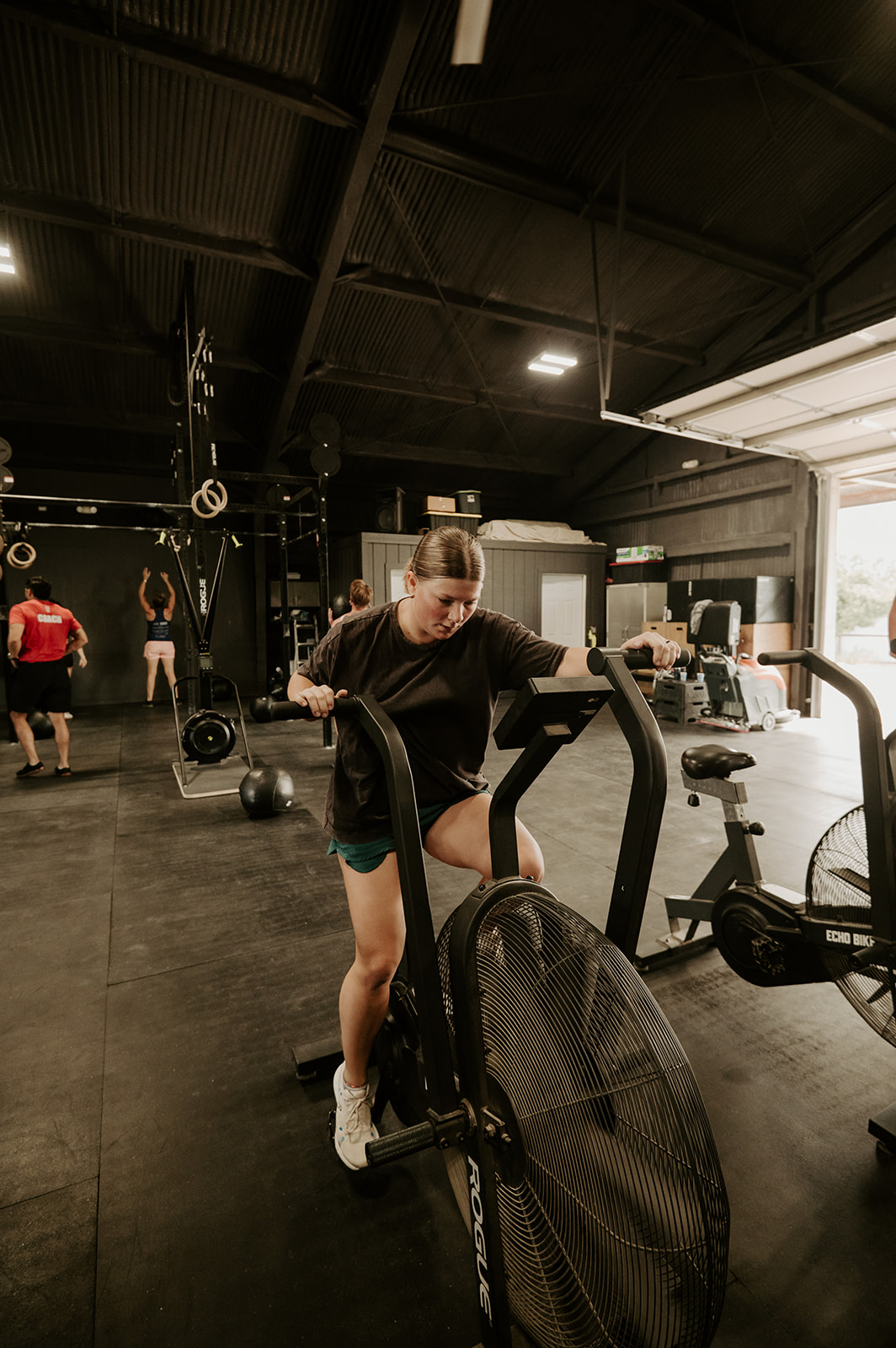
At Longma Fitness, we work with parents at every stage of family life, from those with newborns to those with kids in college. The parents who succeed at fitness haven't found more time than everyone else. They've learned to build their routines around family life instead of fighting against it.
Here's how to make fitness work when your schedule revolves around your kids.
The Guilt Trap Most Parents Fall Into
The biggest obstacle to parent fitness isn't time. It's guilt.
Every hour you spend at the gym feels like an hour you're not spending with your family. Every workout feels selfish. Every early morning alarm feels like you're stealing from your kids or your partner. This guilt kills more parent fitness attempts than any scheduling conflict ever could.
But taking care of your fitness is taking care of your family. The version of you that trains consistently has more energy, better patience, improved mood, better sleep, longer life expectancy, and greater capacity to actually be present with your kids. You're not choosing between fitness and family. You're building the physical and mental foundation that lets you show up better for your family.
The parents who model healthy habits raise kids who value healthy habits. The parents who prioritize their own well-being teach their kids that self-care isn't selfish. The parents who stay strong and capable well into their 60s and 70s can play with grandkids, travel actively, and remain independent.
Every workout you complete is an investment in the parent (and eventually grandparent) you're becoming.
The New School-Year Reality
School being back in session changes everything about how you can structure fitness.
The good news is that predictability returns. You know where your kids are during school hours. You know approximately when they need to be picked up. Weekday mornings and midday windows suddenly open up. Bedtimes become more consistent, which means evenings become more usable.
The bad news is that afternoons and evenings often become more, not less, complicated. Sports practices, homework help, evening activities, and family dinners crowd the after-school hours. What used to be flexible summer time becomes tightly scheduled around your kids' commitments.
This means most parents need to shift their thinking. The evening workouts that worked in summer might not work now. Early mornings, late afternoons during school hours, or after-bedtime slots might become the new windows. The key is looking at your fall schedule honestly and finding the windows that actually exist, not the ones you wish existed.
Strategy 1: Claim the Morning Window
For many parents, early morning becomes the most reliable training window during the school year.
The appeal is obvious. Nothing has come up yet. No unexpected work meetings, no last-minute kid emergencies, no shifting evening plans. If you train at 5:30 AM, you're done by 6:30 AM and the rest of your day can absorb whatever chaos it needs to.
This requires an adjustment. Earlier bedtimes become non-negotiable. If you need to be up at 5 AM, you need to be asleep by 9:30 or 10 PM. This means shifting the entire family's evening routine, or at least accepting that your Netflix-until-midnight days are over.
The trade-off is significant, but the reward is a training routine that survives everything the school year throws at it. You'll never miss a workout because of an unexpected work meeting or a sick kid or a school event that pops up. Your training is done before the day begins.
Strategy 2: Use the School Day Window
If you work from home, have flexible work hours, or work part-time, the school day itself provides an ideal training window.
Between drop-off and pickup, you have roughly six hours of predictable time. Even accounting for work, commute, and other commitments, most people can find a 45-60 minute window somewhere in there.
Mid-morning workouts (around 9-10 AM) are particularly effective. You've had time to eat, coffee, and start your day. The gym is typically less crowded at this time. You return home energized and ready to be productive.
Lunch-hour workouts work well too, especially if your gym is close to work or home. The key is planning it in advance rather than hoping to squeeze it in.
Strategy 3: Trade Off With Your Partner
If you have a partner or co-parent, coordinating fitness time is one of the most powerful strategies available.
The idea is simple. You train Monday, Wednesday, and Friday mornings while your partner handles kid duties. Your partner trains Tuesday, Thursday, and Saturday mornings while you handle kids. Each of you gets three protected training days per week without either of you sacrificing family time.
This requires honest conversation about priorities and equal commitment to both people's fitness. It works when both partners genuinely support each other's health, not when one person's fitness is treated as more important than the other's.
For single parents, this trade-off might happen with family members, friends, or paid childcare. The principle is the same. Protected training time requires planning and support systems.
Strategy 4: Bring the Kids Along
Some gyms welcome kids, and some workouts naturally include them.
If your gym has childcare (many CrossFit gyms and family-focused facilities do) or is kid-friendly, this eliminates the "who watches the kids" problem. Your children get supervised playtime while you get your training in. Everyone wins.
For at-home training, kids can often be present without derailing your workout. Little kids can play nearby while you work through a bodyweight routine. Older kids can even join in for parts of it. Some parents find that letting kids do their own "workout" alongside them creates bonding time and models healthy behavior.
Outdoor activity naturally accommodates kids. Bike rides, hikes, park visits, and yard workouts can include the whole family. This might not replace focused training, but it adds movement and models activity as part of family culture.
Strategy 5: Embrace the Short Session
Perfect 60-minute training sessions are wonderful when you can get them. But some days, you can only get 20 or 30 minutes. Those days still count.
A 20-minute intense workout is better than no workout. A quick session before dinner is better than skipping altogether because you can't do the full hour you planned. Consistency across imperfect sessions produces better results than occasional perfect sessions punctuated by long absences.
The parent who trains 20-30 minutes daily on chaotic weeks maintains fitness better than the parent who insists on 60-minute sessions and misses entire weeks when those aren't possible.
What This Looks Like in Real Life
A realistic training week for a parent during the school year might look something like this. Monday, you're up at 5:00 AM for a 5:30 gym class, home by 6:45 to handle the morning routine. Tuesday, your partner trains in the morning while you get the kids to school. Wednesday, you sneak in a mid-morning workout while the kids are at school. Thursday, you skip the gym because of an evening school event, but you take a 30-minute walk during your lunch break. Friday, back to the 5:30 AM class. Saturday, you and your family go for a hike together. Sunday, rest and prep for the week ahead.
This isn't perfect. Some weeks will look different because life happens. But this pattern maintains four to five training touches per week while respecting the reality of a school-year family schedule.
The Long Game
Building a fitness routine around your family isn't about finding the perfect schedule. It's about building a system that flexes with your life and continues showing up week after week, year after year.
The parents who succeed don't have magic schedules. They have realistic expectations, strong systems, family support, and the mindset that their fitness matters not despite their family but for their family.
The version of you that stays fit through your kids' childhood is the version of you who can hike with them as teenagers, keep up with them as young adults, and eventually play with their kids as an active grandparent.
That's the long game. And it starts with the training you do this week, this month, this school year.
How Longma Fitness Supports Parents
Our schedule includes early morning classes, mid-morning options, and evening classes that work around school schedules. We understand that parents sometimes need to modify workouts, arrive late, leave early, or occasionally bring a well-behaved kid along for the day. Our community includes many parents who have figured this out, and their experience becomes yours when you join.
We coach with the understanding that consistency matters more than perfection. We celebrate the parent who makes it in three times per week just as much as the athlete who trains six days. Both are winning their version of the fitness game.
If you're a parent trying to figure out how to fit fitness back into your school-year routine, you're not alone. And you don't have to figure it out alone.
🎯 Free 10-Minute Discovery Call
Ready to build a sustainable fitness routine that fits your family life?
Schedule a complimentary 10-minute discovery call where we'll discuss your family schedule, explain how our classes can fit your routine, show you what other parents have made work, and see if Longma Fitness is the right fit for you.
No pressure, no commitment. Just a quick conversation to see if we can help.
.jpg)